1. Blog
  2. Article

Canonical
on 3 August 2017

Upgrading your Ubuntu-on-Windows install to the app version


Our team and Microsoft recently released Ubuntu as a Windows app store application! If you toyed with the “bash on Ubuntu on Windows” version before and would like to try the latest and greatest, read on!
Saving your data

If your “bash on ubuntu on windows” environment has some data you’d like to keep, make sure you back it up now. The uninstall process will nuke everything.

Uninstall the old way

This is relatively simple. Opening a command line (cmd.exe) terminal and typing

lxrun /uninstall

will destroy your previous environment.

Installing the new way

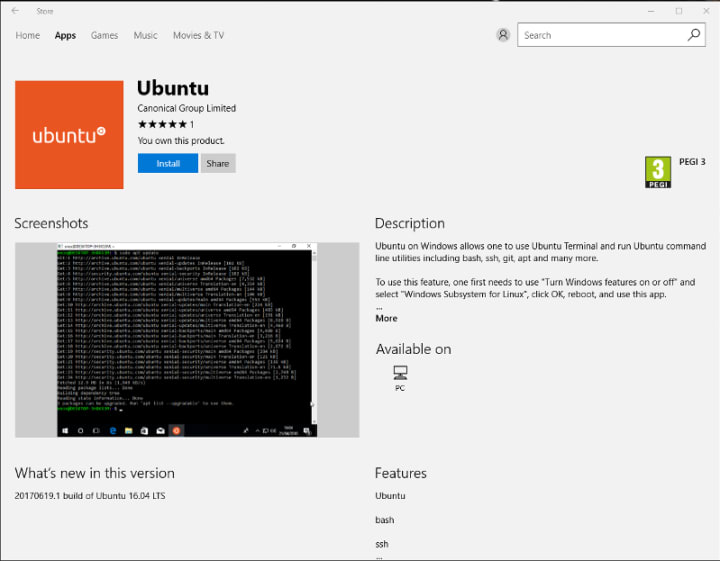
To find the app in the Microsoft store, just type “Ubuntu” in the search bar. Click install. Voilà!

Related posts


David Beamonte
14 July 2026

MAAS installation: bare metal provisioning is easier than ever

MAAS Ubuntu tech blog

MAAS brings cloud-like automation to physical servers. It helps teams discover, commission, deploy, and repurpose machines from a central control plane, turning bare metal into a programmable resource. But to experience that value, users first need to get MAAS up and running. That path is now cleaner and easier to follow. We’ve created ne ...


seth-arnold
11 July 2026

Januscape vulnerability CVE-2026-53359 mitigations available

Ubuntu Article

Introduction A local privilege escalation (LPE) vulnerability affecting the Linux kernel was publicly disclosed on July 6, 2026. The vulnerability was assigned CVE ID CVE-2026-53359 and is referred to as Januscape. This vulnerability affects all Ubuntu releases. Neither NVD nor Kernel.org have published their own CVSS scores for this issu ...


David Beamonte
9 July 2026

Managing Ubuntu on bare metal at scale

MAAS Ubuntu tech blog

Modern infrastructure teams are expected to deliver cloud-like speed, consistency, and reliability, even when their workloads run on physical servers. Bare metal remains essential for many environments: private clouds, Kubernetes clusters, AI infrastructure, edge sites, regulated platforms, and large Ubuntu estates. But operating physical ...