

Canonical
16 October 2018
Canonical collaborates with Eurotech on edge computing solutions
Coinciding with IoT World Solutions Congress in Barcelona this week, Canonical is pleased to announce a dual-pronged technological partnership with Eurotech to help organisations advance their internet of things enablement. Eurotech is a long time leader in embedded computing hardware as well as providing software solutions to aid enterprises to deliver their IoT projects either end to end or by providing intervening building blocks.
As part of the partnership, Canonical has published a Snap for the Eclipse Kura project – the popular, open-source Java-based IoT edge framework. Having Kura available as a Snap – the universal Linux application packaging format – will enable a wider availability of Linux users across multiple distributions to take advantage of the framework and ensure it is supported on more hardware. Snap support will also extend on Eurotech’s commercially supported version; the Everywhere Software Framework (ESF). By installing Kura as a Snap on a device, users will benefit with automatic updates to ensure they are always working from the latest version while with the reassurance of a secure, confined environment.
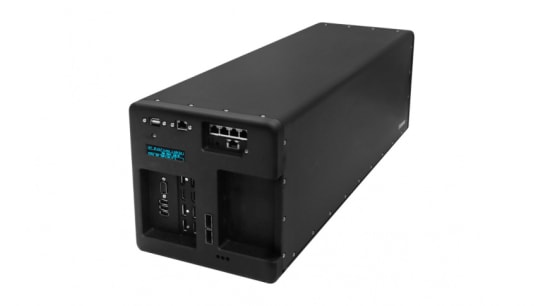
The second element to the partnership will see Ubuntu added as an additional operating system on Eurotech’s unique liquid cooled high performance embedded computers (HPEC). These HPECs are designed for demanding artificial intelligence (AI) applications at the edge such as fully autonomous driving where many decisions are essential to be made locally. Eurotech’s HPECs enable faster data access and management while maintaining the same advanced computational performance for such environments.
“We are proud to start this new technological partnership with Canonical. IoT and AI on the Edge are ecosystem plays. With the collaboration between Eurotech and Canonical, customers will have even more choices and more ready-to-use building blocks for their Edge Computing and Edge Inference projects” comments Marco Carrer, Eurotech Group CTO.
“Through this partnership, Canonical and Eurotech will help enable further innovation and development for customers building Edge computing projects whilst reducing complexity. In addition, having Kura available as a Snap will open the framework up to a wider pool of developers to benefit from” says Tom Canning, VP of Global Sales, IoT & Devices at Canonical.
To find out more about the partnership, visit Canonical at Hall B, stand 220 at IoT World Solutions Congress from 16-18th October 2018. Alternatively, click here to get in touch and find out more.


