

Canonical
27 May 2022
Canonical attends World Data Summit 2022
Canonical, the publisher of Ubuntu, joined the World Data Summit held in Amsterdam, Netherlands, last May 18-20, 2022. Michelle Anne Tabirao, Data Solutions Product Manager, participated as a speaker in a technical workshop and a panel discussion.
Discussing the latest trends in data
World Data Summit is a three-day conference covering multiple vital topics such as data management, data analytics, AI, future technologies, and more. In addition, the event shares best practices for developing an analytical model to drive business growth and optimisation.
During this edition, experts discussed multiple aspects of data analysis, visualisation and interpretability. In addition, the conference had various sessions on customer analytics, technical deep dives and panel discussions.
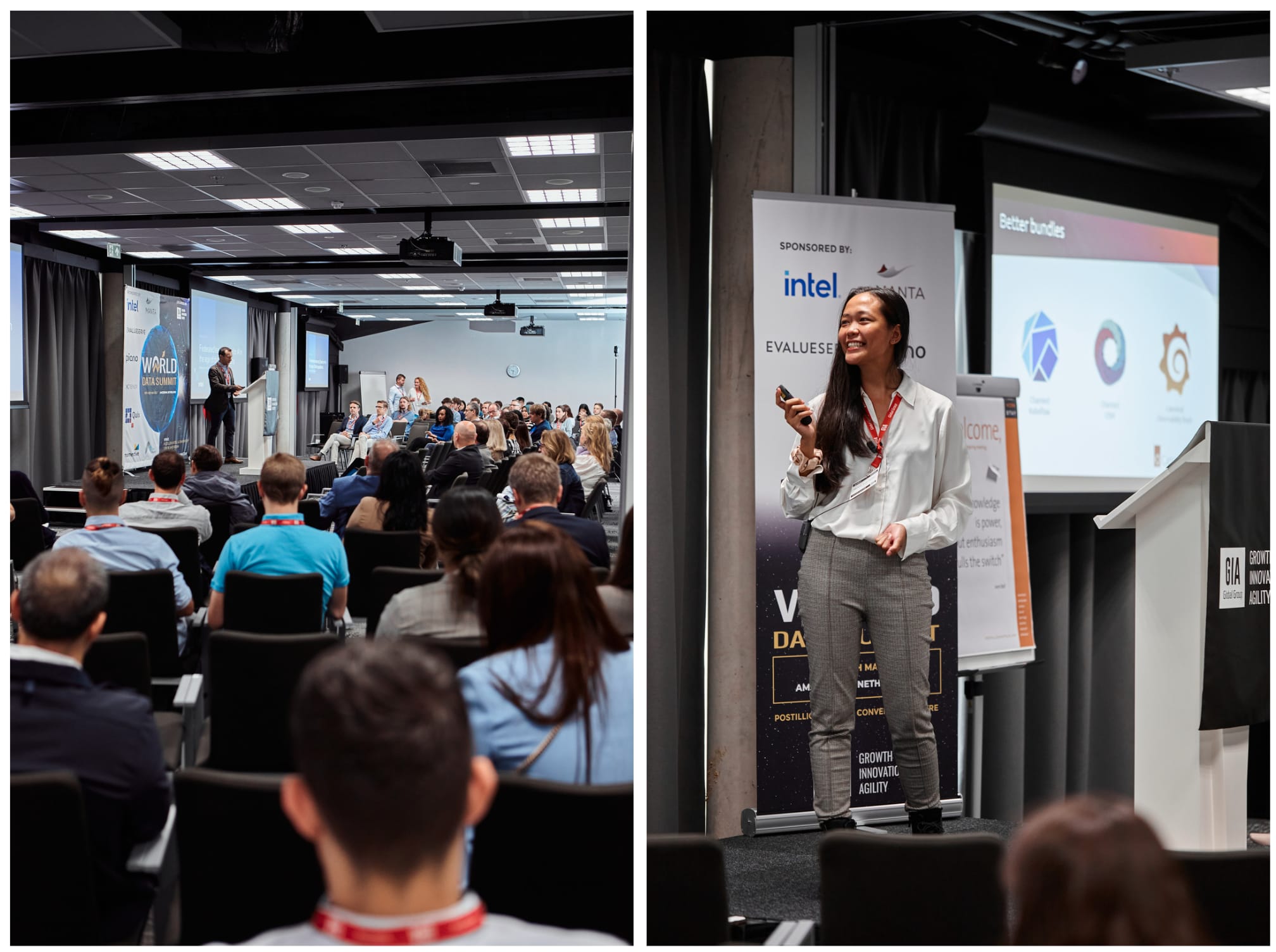
Data solutions on any cloud
Michelle from Canonical shared perspectives on data solutions, highlighting cloud-native computing, open source database applications, and Canonical database operators – Charmhub.io and the Juju Charmed Operator Framework. These were the key highlights from the talk:
- There is an increasing trend of containerized applications, e.g. Kubernetes, in production.
- Cloud-native technologies empower organisations to build and run scalable applications in public, private and hybrid environments.
- Due to organisations’ requirements for databases, running a cloud-native database application in Kubernetes is becoming a trend.
- Organisations should consider the operational work that needs support when running a database in Kubernetes.
- Operators control database and Kubernetes primitives to simplify deployment and automate the apps’ operations.
Reducing costs with AI
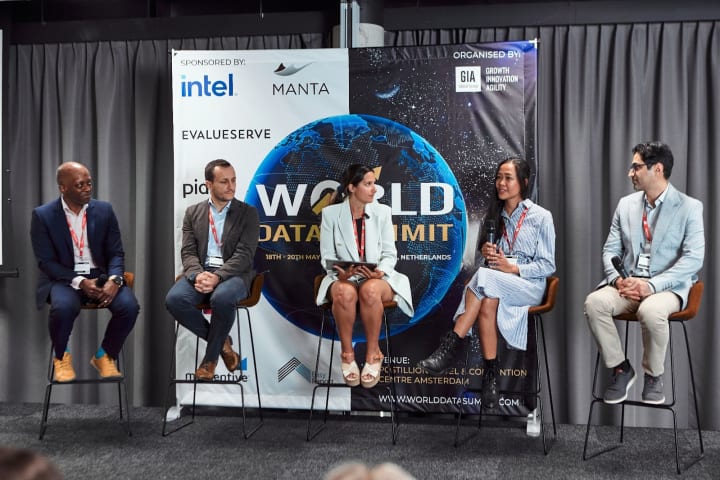
Michelle also participated in a panel discussion on reducing company costs using AI. Camila Manera, the Chief Data Officer of LDP, moderated the session. In addition, other representatives from organisations such as Tawuniya, Boston University, and Intel shared their perspectives.
Many companies and organisations use AI models to reduce costs and increase revenue. For example, many minimise errors with AI, improve production output, and improve organisational decision-making. As a result, cost reductions can be seen in long-term and short-term investments for different organisations. More takeaways from the event:
- There are multiple perspectives to consider when delivering AI solutions: the cost of having AI, the cost of running AI, and the margin between the investment and return.
- To reduce costs, the industry needs to improve data literacy and redefine what good looks like – for ourselves, our firms, and the societies we live in.
- The fundamentals are: understanding the value and problems we are trying to resolve through technology.
- There are open source tools and innovations that organisations can build, run and innovate AI projects, e.g. TensorFlow, Python, Pandas, Kubeflow.
Stay tuned
Follow the World Data Summit organisation as they prepare for the 2023 event! Next year, we hope to see you at this gathering for data professionals and decision-makers.
World Data Summit is organised by Growth Innovation Agility Global Group (GIA).


